Furnace Maintenance Checklist for San Antonio Homes: Fall Routine
Use this furnace maintenance checklist each fall in San Antonio: filter, thermostat, vents, CO alarms and a heat test, plus what a pro tune-up covers.
Quick answer
A furnace maintenance checklist for a San Antonio home has two parts: a routine you do each fall and an annual professional inspection. Once each fall: check or replace the air filter, switch the thermostat to heat and confirm it responds, open and clear every vent and return, clear leaves and debris from around a heat pump's outdoor unit, and run a short heat test. Stop and call if you notice burning or gas smells, banging, or air that never warms.
Article Topics
- Why Fall Furnace Maintenance Matters in San Antonio
- Your Fall Furnace Maintenance Checklist
- Air Filter Routine: How Often to Check and Change It
- Heat Pump Items for Your Winter Checklist
- Carbon-Monoxide and Smoke Alarm Check
- What the Professional Furnace Tune-Up Should Cover
- What to Listen and Smell For
- What Not to Do Yourself
- Winter Thermostat and Duct Settings That Save Energy
- Round Out the Fall Routine Around the House
- Frequently asked questions
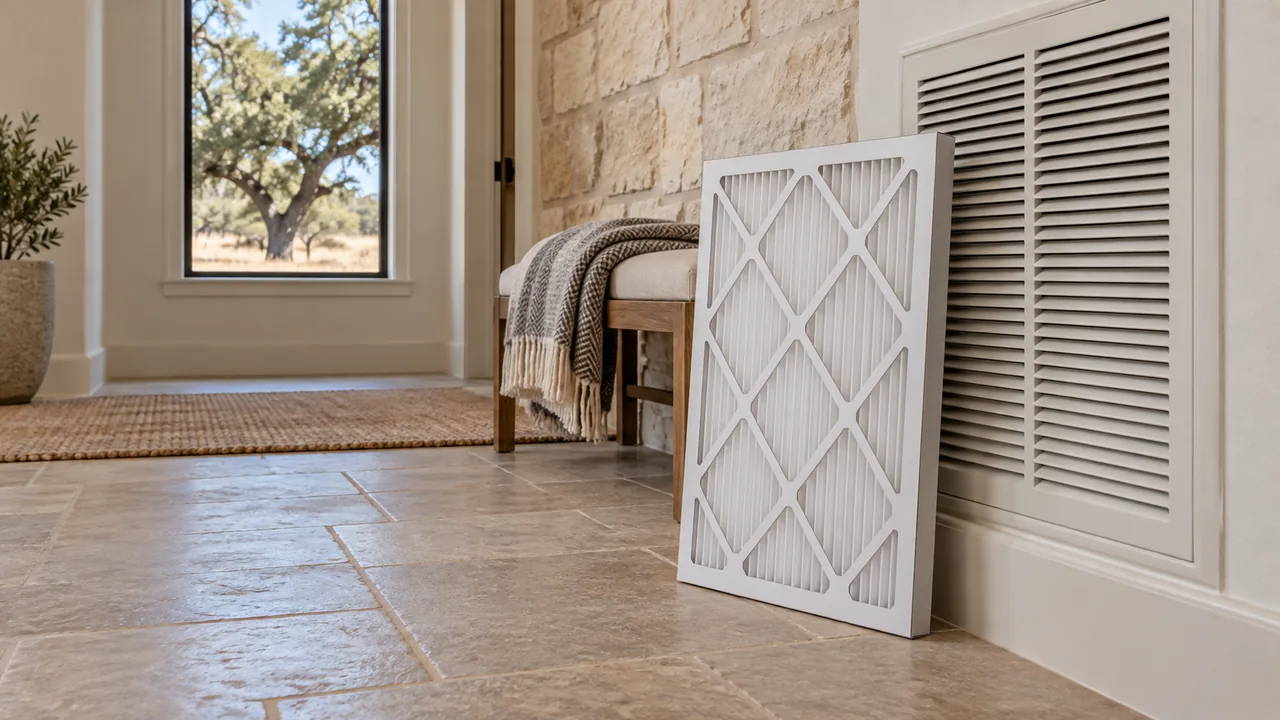
A furnace maintenance checklist keeps your San Antonio heating system ready before the first cold front, when heating contractors get busy. Most of it is the short routine a homeowner can do safely in one afternoon each fall. If your heat has already quit or a cold front is on the way, start with the no-heat checks for a heater not working.
The checklist has two halves. The first is the routine you handle yourself: filter, thermostat, vents, alarms and a heat test. The second is the annual professional inspection, which covers the gas, combustion and electrical parts you should never open.
Why Fall Furnace Maintenance Matters in San Antonio
In a mild climate, a furnace or heat pump can sit mostly idle for months, so small problems often stay hidden until the first cold night. That makes fall the right time for winter HVAC maintenance. ENERGY STAR recommends checking the heating system in the fall because contractors get busy once winter arrives. It also warns that a dirty filter can increase energy costs and damage your equipment, leading to early failure, and that improperly operating gas connections are a fire hazard and can contribute to health problems.
Safety is the other reason. The U.S. Consumer Product Safety Commission recommends having the heating system professionally inspected and serviced every year, and CPS Energy recommends an annual inspection of central heating by a licensed professional.
Your Fall Furnace Maintenance Checklist
- Filter. Check it and replace it if it is dirty.
- Thermostat. Switch to heat, set it a few degrees above room temperature and confirm the system starts. Replace the thermostat's batteries if it uses them.
- Vents and returns. Open every supply vent and clear furniture and rugs from return grilles.
- Outdoor unit. For a heat pump, clear leaves, debris and plants from around the outdoor unit.
- Heat test. Run the heat for a short test and confirm warm air at the vents.
- Carbon-monoxide alarms. Test them and replace batteries, especially if the home has gas appliances or an attached garage.
- Smoke alarms. Test them at the same time. CPS Energy recommends testing smoke and carbon-monoxide alarms monthly.
- Furnace area. Keep the space around the furnace or air handler clear of boxes, paint, cleaning products and anything else that can burn.
- Flame color. If your gas furnace has a viewing window, look without opening anything. CPS Energy says a yellow or orange flame may indicate a problem a qualified technician should check.
- Professional inspection. Book the annual tune-up in the fall, before the first cold front.
Air Filter Routine: How Often to Check and Change It
The filter is the one item you will repeat all winter. ENERGY STAR says to check the furnace filter once a month, especially during the heavy-use winter months, and to clean or replace it at least every three months. CPS Energy suggests changing filters each month. Carrier's guidance for typical 1-inch filters is every 30 to 90 days, and 6 to 12 months for 4-inch media filters.
Turn the system off before you swap the filter. The size is printed on the frame of the filter you have now. Install the new one with the airflow arrow pointing toward the furnace or air handler, and make sure it sits fully in its slot. Homes with pets, dust or allergies usually need more frequent changes.
Heat Pump Items for Your Winter Checklist
- Keep leaves, debris and plants clear around the outdoor unit.
- Clean or replace the filter when it is visibly dirty or when the filter light comes on, as ENERGY STAR advises.
- Expect light frost in cold, damp weather. Carrier says a frost layer generally under 1/4 inch is normal and should clear during the defrost cycle. Heavy ice that remains after defrost needs a professional.
- Skip deep setbacks. ENERGY STAR says heat pumps do not save energy by turning the temperature down when you are away or asleep, so pick a comfortable setting and leave it there.
If your system pairs a heat pump with a gas furnace for backup heat, both halves belong on the checklist and in the professional inspection.
Carbon-Monoxide and Smoke Alarm Check
The CPSC recommends battery-operated or battery-backup carbon-monoxide alarms on every level of the home and outside sleeping areas, and advises against spots near heating vents or where furniture or drapes can cover them. Its 2026 winter safety release adds that you should test the alarms every month. The CPSC also says interconnected CO alarms are best, because when one sounds, they all sound.
Symptoms of carbon-monoxide poisoning include headache, dizziness, weakness, nausea, vomiting, sleepiness and confusion. If an alarm sounds, do not search for the source. Move outside to fresh air and call 911.
Hardwired, interconnected alarms are electrical work. C.S.W. Power Solutions handles smoke and carbon-monoxide alarm installation as a licensed electrical contractor.
What the Professional Furnace Tune-Up Should Cover
Your furnace maintenance checklist stops at the access panel. ENERGY STAR says a contractor's heating check should include all gas or oil connections, gas pressure, burner combustion and the heat exchanger. The CPSC adds that an inspector should check chimneys and flues for blockages, corrosion, and partial or complete disconnections. Carrier's annual furnace checklist also includes the burners and igniter, the blower, wiring, and the flue pipe and ductwork.
| Item | You, each fall | HVAC professional, each year |
|---|---|---|
| Air filter | Check monthly; replace when dirty | Checks, replaces or cleans it |
| Thermostat | Switch to Heat, test, replace batteries | Checks thermostat operation |
| Vents and returns | Open and clear them | Inspects ductwork |
| Gas connections and pressure | Do not touch | Checks connections and gas pressure |
| Burners, igniter and combustion | Look at flame color only | Cleans, inspects and checks combustion |
| Heat exchanger | Do not open | Inspects for cracks, holes or leaks |
| Flue and venting | Keep the area clear | Checks for blockage, corrosion and disconnection |
When you book, ask which of these items the visit includes and ask for written findings. Keep them with your service records.
What to Listen and Smell For
A short dusty smell at first startup can be normal. Persistent burning or electrical smells, a gas odor, banging or grinding, or air that never warms are reasons to shut the system off if it is safe and arrange service.
If your heat test turns up one of these, use the warning signs for a heater not working to decide whether to shut the system off now or schedule a visit.
What Not to Do Yourself
Do not open equipment panels, touch gas connections or work on electrical components. Internal cleaning and inspection belong to a qualified HVAC professional.
If you smell gas at any point, leave the house, go to another location and call 911 and CPS Energy at 210-353-HELP (4357). After the utility clears the home, gas piping repairs go to a licensed plumber; C.S.W. Power Solutions handles gas line repair under Responsible Master Plumber RMP #46592. A breaker that trips repeatedly on the heating circuit is a job for a licensed electrician in San Antonio.
Winter Thermostat and Duct Settings That Save Energy
CPS Energy suggests 68°F when you are home and 2 to 3 degrees lower when you are away or asleep. It also notes that setting the thermostat higher will not heat your home faster and just wastes energy. Heat pump owners should skip the setback, per ENERGY STAR. If your thermostat is unreliable or hard to program, it may be time to look at thermostat replacement options.
ENERGY STAR also says sealing and insulating air ducts, especially in an attic or crawlspace, can improve HVAC system efficiency by as much as 10%. Rooms that stay much colder than the rest of the house are worth raising during the tune-up or with a separate ductwork inspection.
Round Out the Fall Routine Around the House
The same afternoon is a good time to check the other cold-weather items in your home. If you have a gas water heater, look for leaks or rust around its base and note its age; a water heater repair or replacement decision is easier to make before winter than after a failure. Insulate exposed pipes and find your main water shutoff using the steps to prevent frozen pipes.
Keep a simple record of each filter change, its size, alarm test dates and the tune-up date with the technician's findings. Next fall, your furnace maintenance checklist starts from that record instead of from memory.
Frequently asked questions
How often should I change my HVAC filter in winter?
Check it monthly during heavy use and replace it when it looks dirty or on the schedule the filter maker recommends. Homes with pets, dust or allergies usually need more frequent changes.
What should I listen and smell for during a heat test?
A short dusty smell at first startup can be normal. Persistent burning or electrical smells, a gas odor, banging or grinding, or air that never warms are reasons to shut the system off if safe and have it checked.
Is this checklist a replacement for professional maintenance?
No. It covers the steps a homeowner can do safely without opening equipment. Internal parts, gas connections and electrical components belong to a qualified HVAC professional.
When should I schedule furnace maintenance in San Antonio?
Schedule it in the fall, before the first strong cold front. ENERGY STAR recommends checking the heating system in the fall because contractors get busy once winter arrives, and the CPSC recommends having the heating system professionally inspected and serviced every year.
Do heat pumps need winter maintenance too?
Yes. Keep the outdoor unit clear of leaves and plants, clean or replace the filter when it is visibly dirty, and expect light frost that clears during defrost. Heavy ice that stays after a defrost cycle, or defrost that runs unusually often, is a reason to have the system inspected.
Where should carbon-monoxide alarms go?
The CPSC recommends battery-operated or battery-backup carbon-monoxide alarms on every level of the home and outside sleeping areas, away from heating vents and anything that could cover them. Test them every month. Interconnected alarms are best, because when one sounds, they all sound.
Sources
- ENERGY STAR (U.S. EPA), Maintenance Checklist. Retrieved October 13, 2026.
- ENERGY STAR (U.S. EPA), Save on Heating Costs with ENERGY STAR This Season. Retrieved October 13, 2026.
- U.S. Consumer Product Safety Commission, Carbon Monoxide Questions and Answers. Retrieved October 13, 2026.
- U.S. Consumer Product Safety Commission, Keep Warm and Safe This Winter: Tips for Using Generators, Furnaces and Space Heaters (January 2026). Retrieved October 13, 2026.
- CPS Energy, Let's Prepare! (Winter Preparedness & Safety). Retrieved October 13, 2026.
- CPS Energy, Energy Saving Tips. Retrieved October 13, 2026.
- Carrier, Annual Furnace Maintenance Guide. Retrieved October 13, 2026.
- ENERGY STAR (U.S. EPA), Air-Source Heat Pumps. Retrieved October 13, 2026.
- Carrier, Heat Pump Not Heating? Troubleshooting Cold Air Issues. Retrieved October 13, 2026.
Something off during your heat test?
Contact us to discuss HVAC-related project needs. Scope, availability and any contractor arrangements are confirmed before work begins. For hardwired carbon-monoxide alarms, a heating circuit that keeps tripping or gas line repair, C.S.W. Power Solutions can help under Texas Electrical Contractor TECL #31793 and Responsible Master Plumber RMP #46592. Call 210-880-2864.
Related service: HVAC Information
Online estimate appointments need at least 24 hours' notice. Need help sooner? Call 24/7: (210) 880-2864.
Or call 210-880-2864