Standby Generator Maintenance and Reliability for Homes and Businesses
How South Texas homes and businesses keep standby generators reliable: exercise cycles, batteries, oil, filters, fuel, transfer switch tests and records.
Quick answer
Follow the manufacturer's maintenance schedule, let the generator run its exercise cycle, and act on any warning light. Have the battery, oil, filters, spark plugs, fuel supply and transfer switch checked on schedule, and keep a service log. A generator that is never tested under load can fail on the day you need it.
Article Topics
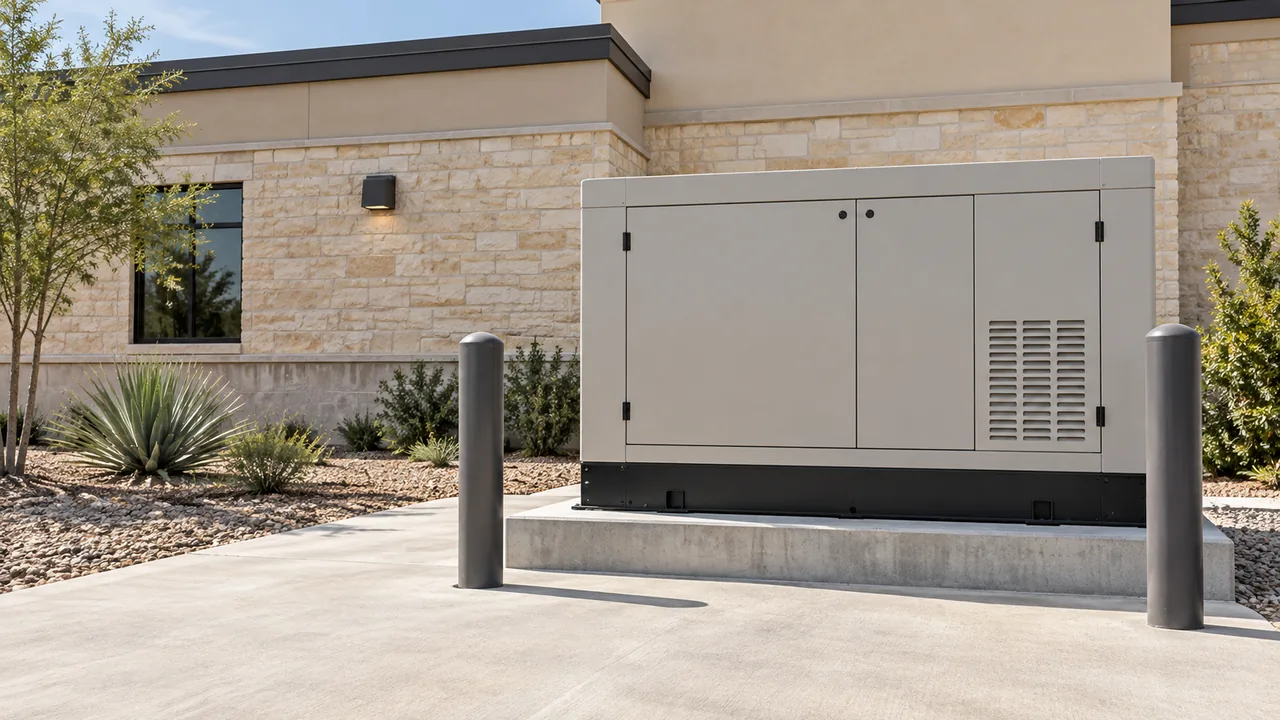
A standby generator is only useful if it starts and carries the load when utility power fails. For homes and light-commercial properties, that reliability comes from routine maintenance and testing.
Let the Exercise Cycle Run
Most standby generators run a short automatic exercise on a schedule. Listen for it, and treat a missed or failed exercise as a warning. If the controller reports status to an app or display, read any message it shows.
Follow the Maintenance Schedule
- Oil and oil filter changes at the intervals in the owner's manual.
- Air filter and spark plug checks.
- Battery testing, and replacement when it weakens.
- Inspection for leaks, corrosion, loose terminals and blocked vents.
- Clearing debris, nests and plant growth from around the enclosure.
The manufacturer's schedule for your model is the authority. Units that run often may need service sooner.
Test the Transfer Switch, Not Just the Engine
A generator that runs during its exercise but never transfers the load has not been tested where it matters. Periodic load testing confirms that the transfer switch moves the selected circuits to generator power and back.
Check the Fuel Supply
Natural gas and propane systems need the right pressure and volume at full load. A unit that starts but stalls under load can point to fuel delivery problems; see gas line services.
For Businesses: Decide What Must Stay On
A business should list the loads that must keep running in an outage, such as refrigeration, security, network equipment or lighting, and confirm the generator and transfer equipment are sized for them. Keep the service log with your emergency plan.
Safety During an Outage
Never run a portable generator indoors or in a garage. Ready.gov says generators and fuel should be used outdoors at least 20 feet from windows, doors and attached garages, and recommends working carbon-monoxide detectors on every level.
Frequently asked questions
How often should a standby generator be serviced?
Follow the manufacturer's schedule for your model, which sets intervals for oil, filters, spark plugs and battery checks based on run time and calendar time. Units that run often, or serve a business, may need more frequent service.
Is a standby generator better than a portable generator?
A standby generator is permanently installed, starts automatically and transfers power through a transfer switch. A portable generator costs less but must be set up, fueled and run outdoors well away from windows and doors to keep carbon monoxide out of the building.
Can a business use a residential-style standby generator?
Some light-commercial properties can, depending on the loads that must stay on, the electrical service and the fuel supply. A load review and a look at the building's service equipment come first.
Sources
- Ready.gov, Power Outages. Retrieved October 4, 2026.
Generator due for service?
C.S.W. Power Solutions can check the generator's electrical connection, transfer switch and panel under TECL #31793 and the gas supply under RMP #46592.
Related service: Generator Services
Online estimate appointments need at least 24 hours' notice. Need help sooner? Call 24/7: (210) 880-2864.
Or call 210-880-2864