AC Repair Warning Signs Before a San Antonio Summer Breakdown
Catch San Antonio AC repair problems before summer breakdowns: weak airflow, warm air, short cycling, leaks, ice, odd noises and when to call.
Quick answer
The most common signs you need AC repair in San Antonio are warm air from the vents, weak airflow, short cycling, ice on the lines, water near the indoor unit and new noises or smells. Check that the thermostat is set to Cool with the fan on Auto, and look at an accessible filter without opening equipment panels. Turn cooling off if ice appears, water reaches electrical equipment, or a burning smell develops, and reset a tripped AC breaker no more than once. Record when symptoms occur and arrange a diagnosis rather than assuming one cause.
Article Topics
- Signs You Need AC Repair: A Quick Checklist
- AC Blowing Warm Air or Weak Airflow
- Short Cycling, New Noises or a Breaker That Keeps Tripping
- Water Around the Indoor Unit, Ice on Lines or Musty Smells
- Air Filter Care in San Antonio Heat
- What a Professional AC Check Should Cover
- Repair or Replace: Questions to Ask
- What to Write Down Before Anyone Arrives
- Getting Help
- Frequently asked questions
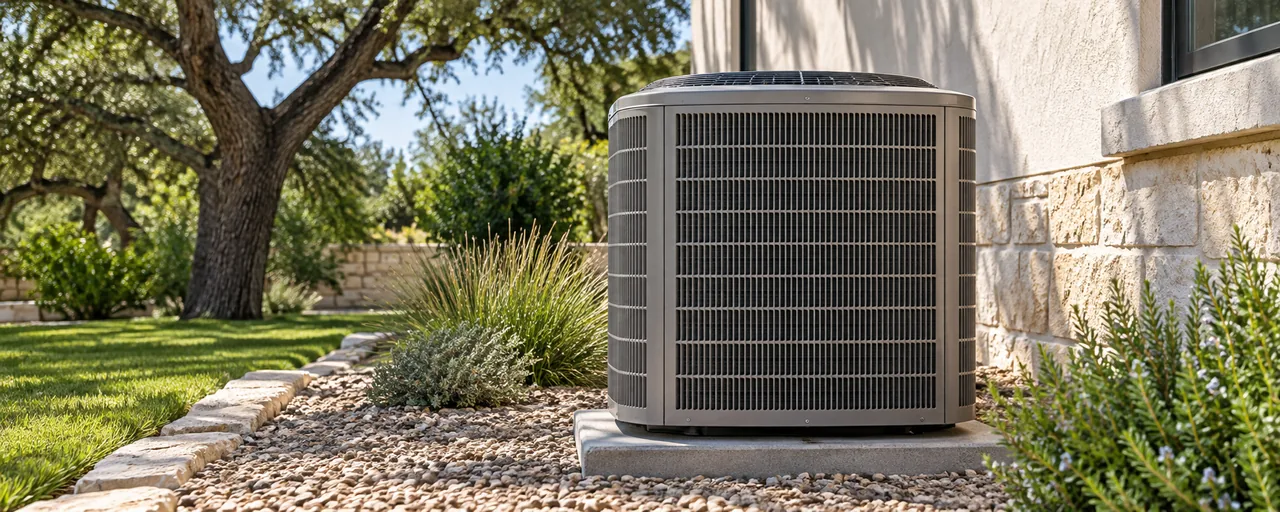
The signs you need AC repair usually show up before a San Antonio summer breakdown: warmer air from the vents, weaker airflow, a system that turns on and off too often, water or ice where it does not belong, and new sounds or smells. Most summer AC failures give some warning first. Catching the early signs, and handling them safely, can turn an emergency into a scheduled visit.
Your system carries a long cooling season here, so the weeks before the hottest stretch of summer are the best time to notice changes. Keep your own checks on the safe side: thermostat settings, the air filter, open vents, and what you can see and hear without opening the equipment. Anything inside an equipment panel, anything involving refrigerant and any breaker that trips more than once belongs with a qualified professional.
Signs You Need AC Repair: A Quick Checklist
Match what you notice with what it can mean and the safe first step. One symptom rarely proves one cause, so treat each row as a starting point for a diagnosis.
| What you notice | What it can point to | Safe first step |
|---|---|---|
| Warm air from the vents | Thermostat or fan setting, dirty filter, tripped breaker, refrigerant leak, compressor or electrical problem | Confirm Cool mode and fan on Auto, replace a dirty filter, then turn the system off and schedule service if the air stays warm |
| Weak airflow | Clogged filter, closed or blocked vents, blower problem, frozen coil, duct restriction | Replace a dirty filter and open supply vents |
| Short cycling | Dirty filter, low refrigerant, thermostat or control problem | Check the filter and note how often the system starts and stops |
| Ice on the lines or coil | Restricted airflow or low refrigerant | Turn cooling off and leave it off until the cause is found |
| Water near the indoor unit | Clogged condensate drain, melting ice, damaged drain pan | Turn cooling off if water is near electrical parts and protect finishes |
| Breaker trips | Electrical fault in the circuit or the equipment | Reset no more than once; leave it off if it trips again |
| Musty smell or sticky, humid rooms | Moisture or drainage problem, poor dehumidification | Look for water near the indoor unit and schedule a check |
| Bills climbing while comfort drops | Dirty filter or coils, a failing part, aging equipment | Compare monthly bills and mention the trend to the technician |
AC Blowing Warm Air or Weak Airflow
Weak airflow is one of the easiest early problems to notice. If vents barely move air, rooms feel humid, or the system runs without cooling, the cause may be a clogged filter, a blower problem, a frozen coil, a duct restriction, a refrigerant problem or an electrical control issue.
Replace a dirty filter if needed, make sure supply vents are open, and avoid repeatedly lowering the thermostat to force the system harder. If airflow stays weak, arrange a diagnosis before another hot afternoon stresses the equipment.
When your AC is blowing warm air, start at the thermostat. Carrier recommends confirming it is set to Cool and the fan is set to Auto, because a fan left on On runs constantly and can blow warm air between cooling cycles. Lennox adds that low thermostat batteries can keep the thermostat from communicating with the system. Then check the filter and whether a breaker has tripped. If the outdoor unit has lost power, Lennox notes, the cooling cycle cannot finish and the vents blow warm air.
If the air is still warm after those checks, turn the system off and schedule service. Carrier advises turning off an AC that is blowing warm air because running a malfunctioning system can overheat the compressor and cause permanent damage. Low refrigerant usually means a leak, and Lennox says a licensed technician must diagnose and repair any leak before recharging the system, so adding refrigerant without a repair does not solve the problem.
Short Cycling, New Noises or a Breaker That Keeps Tripping
A system that turns on and off every few minutes is short cycling, which can mean higher bills, poor humidity control and equipment wear. Grinding, buzzing, rattling, screeching or repeated breaker trips can point to motor, capacitor, contactor, fan or compressor problems.
Because air-conditioning equipment combines high-voltage parts, refrigerant and moving parts, do not keep resetting breakers or open equipment panels.
Carrier links short cycling to dirty filters and low refrigerant, so a fresh filter is a reasonable first check. If a breaker serving the AC trips, Lennox advises resetting it only once, and Carrier says not to try again if it trips right after a reset. A breaker that keeps tripping is protecting the circuit, so leave it off and have the cause found. C.S.W. Power Solutions is a licensed electrical contractor (TECL #31793), so the circuit, breaker and wiring that feed the equipment can be reviewed as part of that diagnosis.
Water Around the Indoor Unit, Ice on Lines or Musty Smells
Water near the air handler, a full drain pan, ice on refrigerant lines or musty odors should be handled before ceiling, drywall or flooring damage follows. Ice often means the system is not moving heat correctly, and running it longer can make the freeze worse. Turn the system off if the coil is frozen and protect nearby finishes from water. Water at the indoor unit often points to an AC drain line that is clogged.
Carrier lists a clogged condensate drain line as one of the most frequent reasons an AC leaks water, and notes that a frozen evaporator coil can leak as the ice melts. Restricted airflow from a dirty filter and low refrigerant are common triggers for that freeze. If you see ice, Carrier says to shut the system off immediately to prevent compressor damage, and to leave refrigerant problems to a professional.
Water that reaches ceilings, drywall or flooring needs fast drying. The EPA says to dry water-damaged areas and items within 24 to 48 hours to prevent mold growth, and to keep indoor relative humidity below 60 percent, ideally between 30 and 50 percent. If a ceiling stain appears and you are not sure whether it came from the AC or a plumbing line, leak detection can find the source before you repair the damaged drywall. A lot of indoor AC water traces back to a clogged AC drain line, and its warning signs often show up before an overflow.
Air Filter Care in San Antonio Heat
A clean filter is the simplest way to protect airflow, cooling and your bill. ENERGY STAR recommends inspecting, cleaning or changing the air filter once a month. CPS Energy goes further for local summers and suggests cleaning air filters twice a month from May through October. Follow the filter and equipment maker's instructions for your filter size and type, and replace any filter that looks gray and clogged.
CPS Energy also suggests setting your air conditioner to 78°F when you are home and 2 to 3 degrees higher when you are away. If your bills climb while your comfort drops, compare recent months and look at the common drivers of a high San Antonio summer electric bill before assuming the AC is the only cause. If an older thermostat seems to misread the room or lose its settings, ask about thermostat options.
What a Professional AC Check Should Cover
Some problems only show up with gauges, meters and open panels. The ENERGY STAR maintenance checklist lists contractor tasks that include checking the refrigerant level, cleaning the evaporator and condenser coils, tightening electrical connections, measuring voltage and current on motors, and inspecting the condensate drain while the system is cooling.
Ask which of those items were done and what was found, and keep the notes with your service records. A check before peak heat gives you room to schedule any repair on your terms instead of during a breakdown. If you keep a seasonal routine, add this visit to the same list you use for a fall HVAC checklist.
Repair or Replace: Questions to Ask
When a diagnosis comes back, ask how old the equipment is, how often it has needed repairs, whether the same failure is likely to return, and how the system's efficiency compares with current equipment. SEER2 ratings help you compare running costs if replacement is on the table.
Ask for the repair option and the replacement option in writing so you can compare them side by side, including what each one fixes and what it leaves in place. For background on that decision, see AC replacement information.
What to Write Down Before Anyone Arrives
Note when the problem started, the thermostat setting and indoor temperature, whether it happens at certain times of day, any sounds or smells, and whether a breaker tripped. Photos of ice, water or the thermostat display help a technician narrow down the cause.
Once you have noted the signs you need AC repair, also list the checks you have already made, such as a new filter, a thermostat change or a breaker reset. Carrier recommends telling the technician what you have already checked to save time during the visit.
Getting Help
Contact us to discuss HVAC-related project needs. Scope, availability and any contractor arrangements are confirmed before work begins. C.S.W. Power Solutions can also review connected electrical, water damage or drywall issues when a cooling problem is part of a bigger repair. For background, see AC repair information and HVAC information.
When you call 210-880-2864 or book online, share the symptoms and notes from your list so the right next step is clear from the start.
Frequently asked questions
What are the most common signs that an AC needs repair?
Common signs include weak airflow, warm air, short cycling, unusual noise, water near the indoor unit, ice on refrigerant lines, and rooms that no longer cool evenly. None of them identifies one cause by itself.
Should I turn off my AC if I see ice on the lines?
Yes. Turn cooling off if you see ice on the coil or refrigerant lines, check for a very dirty filter, and arrange service. Running a frozen system can make the problem worse.
Can C.S.W. check electrical issues related to my AC?
C.S.W. Power Solutions performs electrical work under TECL #31793, so symptoms like repeated breaker trips or power problems at the equipment can be reviewed. For the HVAC equipment itself, contact us to discuss your needs; scope, availability and any contractor arrangements are confirmed before work begins.
Why is my AC blowing warm air?
Common causes include a thermostat set to Heat or a fan set to On, low thermostat batteries, a dirty filter, a tripped breaker or lost power at the outdoor unit, a refrigerant leak, or a compressor or electrical problem. Check the thermostat and filter first. If the air stays warm, turn the system off and schedule a diagnosis.
Should I reset my AC breaker if it trips?
Lennox advises resetting an HVAC breaker only once, and Carrier says not to try again if it trips right after a reset. A breaker that keeps tripping is signaling an electrical or equipment fault. Leave it off, note what was running when it tripped, and have a licensed professional find the cause.
How often should I check my AC filter in San Antonio?
ENERGY STAR recommends inspecting, cleaning or changing the air filter once a month. For local summers, CPS Energy suggests cleaning air filters twice a month from May through October. Follow your filter and equipment maker's instructions for your filter type, and replace any filter that looks clogged.
Sources
- Carrier, Why Is My AC Blowing Hot Air?. Retrieved October 13, 2026.
- Carrier, Troubleshoot an Air Conditioner: 6 Steps to Fix an AC Not Working. Retrieved October 13, 2026.
- Carrier, Why Is My AC Leaking Water?. Retrieved October 13, 2026.
- Lennox, Why Is My AC Blowing Hot Air?. Retrieved October 13, 2026.
- ENERGY STAR, Maintenance Checklist. Retrieved October 13, 2026.
- CPS Energy, Energy Saving Tips. Retrieved October 13, 2026.
- U.S. Environmental Protection Agency, A Brief Guide to Mold, Moisture and Your Home. Retrieved October 13, 2026.
Questions about a cooling problem?
Contact us to discuss HVAC-related project needs. Scope, availability and any contractor arrangements are confirmed before work begins. Electrical work connected to the equipment is performed under TECL #31793.
Related service: AC Repair Information
Online estimate appointments need at least 24 hours' notice. Need help sooner? Call 24/7: (210) 880-2864.
Or call 210-880-2864