Water Damage Restoration San Antonio: First 24 Hours
Water damage restoration San Antonio guide: first 24 hours, shutoff steps, drying, documentation, licensed trades, and repair planning.
Water damage restoration in San Antonio moves fast — the first 24 hours decide whether you get drying and repair or a full mold remediation job. Here is what to do. This guide is part of the C.S.W. Power Solutions San Antonio homeowner library. Use the related links on this page to move from research into the matching licensed service page, compare connected trade requirements, and request a written estimate when the project needs plumbing, electrical, HVAC, generator, remodeling, restoration, or general-contractor coordination.
Water Damage Restoration San Antonio: What the First 24 Hours Decide
Water damage restoration in San Antonio is a race against the clock. Act within the first 24 hours and you are typically looking at structural drying, targeted repairs, and a manageable insurance claim. Wait longer and Texas humidity — which regularly sits in the 60-80% range during summer — accelerates mold colonization to the point where remediation costs can double or triple. Whether the source is a burst pipe, a slab leak, a failed water heater, or storm intrusion, the steps you take in the first hour matter more than anything else that follows.
Step One: Stop the Source and Cut the Power
Before anything else, shut off the water supply. For a supply-line failure or appliance leak, use the nearest angle stop valve under the sink or behind the appliance. For a slab leak or unknown source, use the main shutoff at the meter box, usually near the street or along the exterior foundation. Next, kill power to any room with standing water at the breaker panel. Water and live circuits are a fatal combination. Do not re-energize flooded areas until a licensed electrician confirms it is safe. C.S.W. Power Solutions carries electrical license TECL31793 and can perform that clearance the same day in most cases.
Understanding Water Categories Before You Touch Anything
Restoration contractors classify water in three categories. Category 1 is clean water from a supply line or rain intrusion with no contamination. Category 2 — gray water — comes from dishwashers, washing machines, or HVAC condensate pans and carries biological load. Category 3 — black water — includes sewage backflows, rising groundwater, or any Category 1 or 2 source left standing for more than 24-48 hours. The category determines personal protective equipment requirements, disposal protocols, and what materials can be dried in place versus what must be removed. If you have any sewage odor or visible waste, treat the entire affected area as Category 3 and keep people and pets out until a licensed contractor assesses it. For recurring issues tied to slab movement or slow leaks, our leak detection service can locate the source non-invasively before opening walls.
Document Everything Before You Move It
Before moving furniture, pulling up carpet, or starting any drying, photograph and video every affected surface from multiple angles. Open the City of San Antonio Development Services permit portal and note that certain structural repairs — drywall replacement over a certain area, structural framing repairs, and any electrical or plumbing work — require a permit and inspection. Insurance adjusters and city inspectors both want to see pre-mitigation documentation. Date-stamp your photos. Note the time the loss was discovered. If you have a home warranty or are filing through homeowners insurance, that timestamp is often the start of your coverage clock.
Mitigation vs. Structural Repair: Two Different Phases
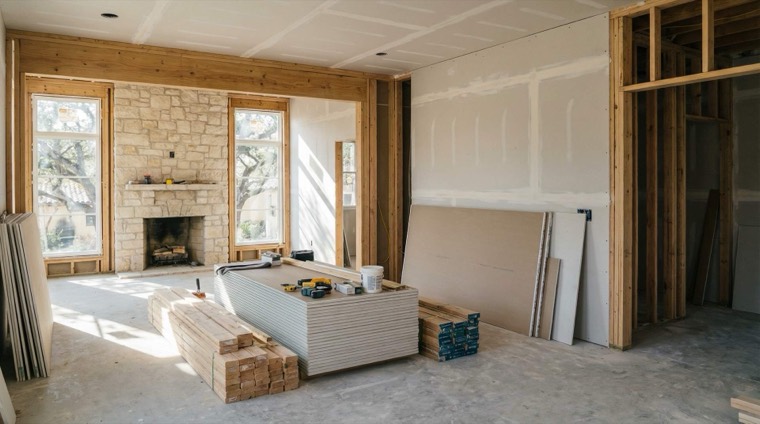
Mitigation is the emergency phase: extract standing water, place commercial-grade air movers and dehumidifiers, and monitor moisture readings daily until materials reach safe dryness levels — typically 3-5 days depending on the structure. Structural repair comes after: replacing drywall, insulation, subfloor, baseboards, or framing that was too saturated to salvage. Many homeowners try to skip straight to repair and close up wet cavities. That is how you get a mold problem inside your walls six months later. C.S.W. handles both phases under one license as a residential damage restoration contractor in San Antonio, which simplifies the insurance billing and eliminates gaps between subcontractors.
Mold Risk in South Texas Is Not Optional
San Antonio sits in a humid subtropical climate. Even in winter, indoor relative humidity can stay elevated enough to support mold growth within 48-72 hours on wet drywall, OSB, or carpet backing. The EPA and FEMA both cite 24-48 hours as the window after which mold growth becomes likely on cellulose materials. This is not a scare tactic — it is the reason licensed restoration contractors use thermal imaging and pin-type moisture meters to find hidden moisture pockets that look dry on the surface. If you are dealing with a water loss that also involves a slab leak in San Antonio, moisture can wick up through the slab for days after the plumbing is repaired. Monitoring does not stop when the water is extracted.
Navigating the Insurance Claim Correctly
Most standard Texas homeowners policies cover sudden and accidental water damage — a burst pipe, appliance failure, or roof intrusion during a storm. They typically exclude flooding from outside sources, gradual leaks, and deferred maintenance. Document the incident as sudden. Report to your insurer within 24 hours if possible. You have the right to hire your own licensed contractor rather than one from the insurer's preferred vendor list. A contractor who also handles residential insurance claims in San Antonio can write a scope of work in the format adjusters expect, which reduces back-and-forth and keeps the project on schedule. Get all verbal approvals in writing before demo begins.
What Licensed Restoration Repairs Actually Cover
After mitigation, a full water damage restoration San Antonio scope can include: plumbing repairs or repipe under CSW plumbing license RMP46592, electrical panel or circuit repairs under TECL31793, HVAC duct cleaning or coil drying under TACLA26479R, drywall replacement and texture match, insulation reinstallation, subfloor repair or replacement, tile reset, interior painting, and finish carpentry. Having all trades in-house under one general contractor license avoids the scheduling gaps that typically extend a project by weeks. Permits for plumbing, electrical, and structural repairs are pulled through the City of San Antonio Development Services Department and close with a final inspection, which protects the homeowner and documents the work for future resale.
Frequently Asked Questions
How quickly does mold grow after water damage in San Antonio?
Mold can begin colonizing wet drywall, insulation, and wood framing within 24-48 hours in San Antonio's humid climate. This is why licensed restoration contractors use moisture meters and thermal imaging to find hidden wet pockets even after visible water is removed. The goal is to get all structural materials to a dry standard within 3-5 days of the initial loss.
Does homeowners insurance cover water damage from a burst pipe in Texas?
Most standard Texas homeowners policies cover sudden and accidental water damage from a burst pipe or appliance failure. They do not cover gradual leaks, deferred maintenance, or flood water entering from outside the structure. Report the loss within 24 hours, document the incident as sudden and unexpected, and consult a licensed contractor who understands how to write a scope of work in the format Texas adjusters require.
What permits are required for water damage repairs in San Antonio?
The City of San Antonio Development Services Department requires permits for plumbing repairs, electrical work, and structural repairs above certain thresholds. Any water damage restoration that involves replacing supply or drain lines, repairing electrical circuits in affected areas, or replacing structural framing typically requires a permit and a final inspection. A licensed general contractor pulls and closes those permits on your behalf.
Can I dry out water damage myself instead of hiring a restoration contractor?
Consumer fans and dehumidifiers move significantly less air volume than commercial-grade restoration equipment, which means drying takes longer and the window for mold growth expands. Without a moisture meter, you also cannot confirm cavities inside walls and under floors are actually dry before closing them up. For small, surface-level Category 1 losses on hard flooring, DIY drying can be adequate. For any loss involving drywall, subfloor, insulation, or gray or black water, a licensed contractor with proper equipment reduces the risk of a mold problem months later.
C.S.W. Power Solutions is a veteran-owned, licensed general contractor serving San Antonio, TX and surrounding communities including Boerne, New Braunfels, Schertz, Stone Oak, Helotes, Alamo Ranch, Converse, Universal City, Live Oak, Leon Valley, Castle Hills, Cibolo, Seguin, and Southtown. Plumbing, electrical, HVAC, generator, EV charger, and remodeling trades all held in-house under one general-contractor license umbrella.
Call 210-504-9796, book online for a written estimate, or text photos so CSW can route plumbing, electrical, HVAC, generator, water heater, drywall, painting, restoration, or general contractor repair requests to the right crew.
Email cswpowersolutions@gmail.com. Located at 4931 Enterprise Drive, Suite 1, San Antonio, TX 78249. Business hours: Mon-Fri 7:00 AM - 6:00 PM, Sat 8:00 AM - 2:00 PM. Free written estimates within one business day.