San Antonio Hard Water: Do You Need a Water Softener?
Do I need a water softener? SAWS puts typical San Antonio hardness at 15 to 20 grains per gallon. See the signs, your options and why to test first.
Quick answer
Do I need a water softener in San Antonio? It depends on a test at your tap and how much scale, spotting and appliance wear bother you, but the water is hard: the Texas Water Development Board describes Edwards Aquifer groundwater, San Antonio's main historical supply, as hard, and SAWS lists typical hardness of 15 to 20 grains per gallon. A softener removes hardness minerals, a salt-free conditioner changes how they deposit, and reverse osmosis treats drinking water at one tap.
Article Topics
- Why San Antonio Hard Water Is So Common
- Do I Need a Water Softener? Check the Numbers First
- Signs of Hard Water in Your Home
- Softener, Salt-Free Conditioner or Reverse Osmosis?
- Sodium, Drinking Water and Your Kitchen Tap
- Sizing and Upkeep
- What a Softener Installation Needs
- Living With Hard Water if You Skip the Softener
- How Hard Water Affects Pipes and Water Heaters
- Questions to Ask Before You Buy
- Frequently asked questions
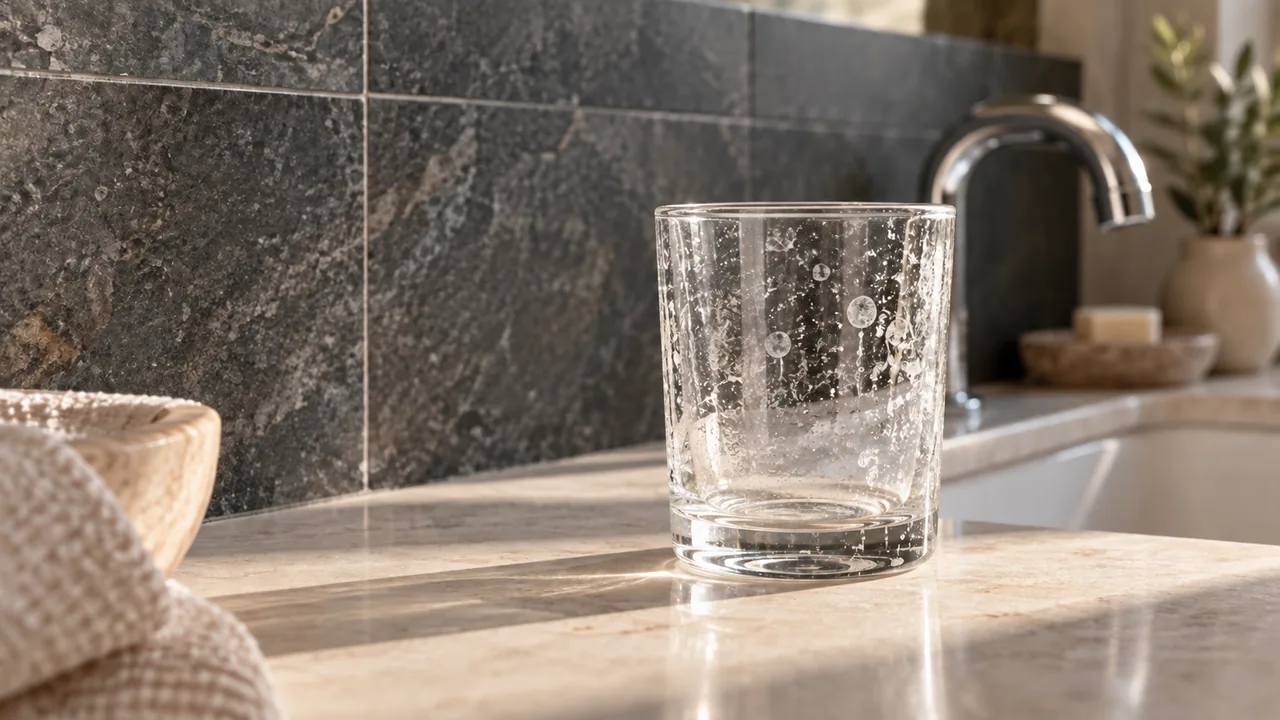
Do I need a water softener in San Antonio? The answer starts with what your water is doing to your fixtures and what a test at your tap shows. If you live in San Antonio, you have probably seen crusty white scale on a showerhead or spots on glasses straight out of the dishwasher. That is hardness: dissolved calcium and magnesium in the water. A water test helps you choose treatment that suits your water and appliances before you buy equipment.
Why San Antonio Hard Water Is So Common
The short answer is geology. The Texas Water Development Board describes the Edwards (Balcones Fault Zone) Aquifer as mostly partially dissolved limestone and says its groundwater is hard but fresh. The same agency notes that San Antonio has obtained almost all of its water from that aquifer. As water moves through limestone, it picks up calcium and magnesium.
SAWS's 2026 water quality report lists groundwater from the Edwards, Carrizo, Simsboro, Trinity and Wilcox aquifers, plus surface water from Canyon Lake in some areas, as its sources. SAWS describes the calcium carbonate in Edwards and Trinity water as naturally occurring.
The U.S. Geological Survey classes hardness by milligrams per liter as calcium carbonate: 0 to 60 is soft, 61 to 120 moderately hard, 121 to 180 hard, and more than 180 very hard.
Hardness varies by source and over time, so check your utility's latest water quality report or test the water at your tap. Hardness is a mineral characteristic, not a safety problem.
Do I Need a Water Softener? Check the Numbers First
SAWS's water quality FAQ puts typical hardness in SAWS water at 15 to 20 grains per gallon. Softener capacity is rated in grains, so that figure matters when a system is sized. The USGS scale above uses milligrams per liter, so compare any test result in the same unit.
SAWS's 2026 water quality report, based on 2025 data, does not list hardness. It explains that calcium and other secondary constituents can affect taste and appearance, are not causes for health concern, are regulated by the State of Texas, and are reported for the system on Texas Drinking Water Watch. If you are on another city's water or a private well, check that supplier's report or have the water tested.
The number alone does not decide it. A water expert quoted by Consumer Reports suggests softening deserves serious thought above about 10 grains per gallon, and says that below that it depends on the problems you see. Weigh the signs below, your test result and your plans for the home together. If you are about to replace a water heater or plan a bathroom remodel, settle the water treatment question first so the new equipment and fixtures are not exposed to untreated hard water from day one.
Signs of Hard Water in Your Home
- White, crusty scale on faucets, showerheads and glass shower doors.
- Spots or a cloudy film on dishes and glasses.
- Soap and shampoo that do not lather well.
- Laundry that comes out stiff or dingy.
- Sediment in the water heater, sometimes heard as popping or rumbling.
Two or three of these together point to hard water. A test tells you how hard it is and whether treatment makes sense.
Softener, Salt-Free Conditioner or Reverse Osmosis?
Salt-based softener. Water passes through resin beads that trade sodium for calcium and magnesium (ion exchange). The result is softened water that lathers well and leaves less scale. The resin is recharged with salt from a brine tank.
Salt-free conditioner. It leaves the minerals in the water and changes how they form scale. There is no salt or brine discharge and little upkeep, but you do not get the feel of softened water.
Reverse osmosis (RO). A membrane system that treats drinking water at one tap, usually the kitchen sink. It solves a different problem and often pairs with whole-house treatment rather than replacing it.
Which fits depends on your test result, how much the hardness bothers you, whether you want to avoid added sodium, and where a brine line could drain. When you are ready to compare equipment, CSW's water softener services start with a test at your tap.
Sodium, Drinking Water and Your Kitchen Tap
A salt-based softener adds sodium to the water as it removes hardness. Consumer Reports says softened water is generally safe to drink, and that potassium chloride can replace sodium chloride salt for people on very low-sodium diets. It also notes that many people prefer the taste of hard water, which is why some homeowners leave the kitchen cold tap unsoftened and add a reverse osmosis unit there for drinking water. If anyone in your home is on a sodium-restricted diet, ask their doctor before you choose a salt-based system.
Sizing and Upkeep
A softener is sized by grain capacity, matched to household water use and the measured hardness. Bigger households and harder water need more capacity so the system is not regenerating constantly.
Upkeep is light. Salt-based units need salt added a few times a year, RO systems need filters and membranes changed on schedule, and salt-free conditioners need little. Price depends on the system, its capacity, plumbing access and any code updates at the install location, so get a written estimate after the water test.
What a Softener Installation Needs
Consumer Reports describes a whole-house softener as installed after the main shutoff and before the water branches to fixtures, with outdoor faucets and sprinklers usually bypassed so you are not softening water for the lawn. A master plumber quoted in the same article notes that the install needs electricity, a drain for backwashing and correct sizing.
Salt-based units send salty brine water to the drain during regeneration. Consumer Reports notes that some areas restrict these systems, so ask where the drain line will go and whether any local rules apply before you buy. The install is also a good time to look at the main shutoff and the pipe near it; if that pipe is corroded or leaking, it is simpler to fix while the plumbing is already open.
Living With Hard Water if You Skip the Softener
If your test shows moderate hardness, or a softener does not fit your plans, regular upkeep limits the damage. SAWS's troubleshooting guide traces white or light-colored sediment to calcium carbonate that drops out of hard water when it is heated or frozen, and recommends flushing the water heater two to three times a year to remove loose deposits. Follow the water heater manufacturer's instructions or have a plumber do it, because the water is hot and gas units need care.
Clean showerheads and faucet aerators when the flow drops. When scale has already damaged a faucet or valve, plumbing fixture repair can restore it. If you already have a softener and see uniform brown particles at the taps, SAWS's guide points to resin escaping from the softener: put it on bypass, have it repaired, and flush the lines in the home.
How Hard Water Affects Pipes and Water Heaters
Heating water makes minerals drop out, so the water heater takes the most wear. In a tank heater, scale settles as sediment and lowers efficiency. In a tankless unit, it builds up in the heat exchanger and can cause errors and flow problems. See water heater repair and replacement.
Scale also coats the inside of supply lines and fixtures over time. In older homes with failing pipe, treatment can pair with repiping.
The USGS notes that when hard water is heated, solid calcium carbonate deposits can form, and that scale can shorten equipment life, raise heating costs and gradually narrow pipes. Popping noises, sediment and rusty water also factor into whether to repair or replace a water heater. Scale builds slowly, while a hard freeze can split a pipe overnight, so before winter also protect exposed pipes from freezing.
Questions to Ask Before You Buy
Once a water test shows whether your home needs a water softener, ask these questions before you sign:
- What is my hardness in grains per gallon, and how was it measured?
- What grain capacity does that call for, given how much water my household uses?
- Will outdoor faucets and irrigation be bypassed?
- Where will the brine and backwash water drain?
- Does the system use sodium chloride or potassium chloride, and how often will I add it?
- What yearly maintenance does the system need, and who handles it?
Consumer Reports notes that installers often sell the products they recommend, so get the test result in writing and compare it with the system you are quoted. A written estimate that names the capacity, bypass and drain plan makes options easy to compare.
Frequently asked questions
Is San Antonio water actually hard?
The Texas Water Development Board describes Edwards Aquifer groundwater as hard but fresh, and the aquifer has long been San Antonio's main supply. The U.S. Geological Survey classes water above 180 mg/L as calcium carbonate as very hard. Your utility's water quality report and an at-home test show the hardness at your tap.
How do I know if I need a water softener?
Look for white scale on faucets and showerheads, spotted glasses, soap that will not lather, stiff laundry, and sediment in the water heater. If you see several of these, test your water before choosing equipment, because the test result drives the type and size of system.
What's the difference between a salt-based softener and a salt-free conditioner?
A salt-based softener removes calcium and magnesium by ion exchange and needs salt for regeneration. A salt-free conditioner leaves the minerals in the water and changes how they form scale, with no brine discharge and little upkeep, but without the feel of softened water.
Where can I find San Antonio's water hardness level?
SAWS's water quality FAQ lists typical hardness of 15 to 20 grains per gallon. The 2026 water quality report does not list hardness; SAWS says secondary constituents such as calcium are reported on Texas Drinking Water Watch. If you are on another utility or a private well, check that supplier or test the water at your tap.
Is softened water safe to drink?
Consumer Reports says softened water is generally safe to drink, though a salt-based softener adds sodium. Potassium chloride can replace sodium chloride salt for people on very low-sodium diets, and some homeowners keep the kitchen cold tap unsoftened. If anyone in the home is on a sodium-restricted diet, ask their doctor before choosing a system.
Will a water softener help my water heater?
The USGS says heating hard water causes solid calcium carbonate deposits to form, and that scale can shorten equipment life and raise heating costs. A softener removes the minerals that form that scale. Without one, SAWS recommends flushing the water heater two to three times a year to remove loose calcium carbonate.
Sources
- Texas Water Development Board, Edwards (Balcones Fault Zone) Aquifer. Retrieved October 13, 2026.
- U.S. Geological Survey, Hardness of Water. Retrieved October 13, 2026.
- San Antonio Water System, Your 2026 Water Quality Report. Retrieved October 13, 2026.
- San Antonio Water System, 2026 SAWS Main System Water Quality Report. Retrieved October 13, 2026.
- San Antonio Water System, Water Quality FAQs. Retrieved October 13, 2026.
- San Antonio Water System, Trouble-Shooting Water Quality Concerns. Retrieved October 13, 2026.
- Consumer Reports, Got Hard Water? Here's What to Know About Water Softeners. Retrieved October 13, 2026.
Want your water tested?
C.S.W. Power Solutions' licensed plumbers (RMP #46592) can test your water and review the treatment options that fit your home in a written estimate. Call 210-880-2864 or book a visit online.
Related service: Water Softener Services
Online estimate appointments need at least 24 hours' notice. Need help sooner? Call 24/7: (210) 880-2864.
Or call 210-880-2864