AC Not Cooling in San Antonio? Causes, First Steps, and When to Call a Pro
AC not cooling in San Antonio? Top causes, the first thing to check, DIY fixes, and when to call a licensed CSW HVAC pro (TACLA26479R).
When your AC is not cooling in San Antonio, the most common culprits are a clogged air filter, a tripped breaker, a frozen evaporator coil, or a dirty outdoor condenser choking on June heat. The single most useful first step is to check the thermostat and the breaker, then pull and inspect the air filter. C.S.W. Power Solutions is a veteran-owned, licensed San Antonio HVAC contractor (TACLA26479R) that walks homeowners through these checks and handles the repairs that need a pro. This guide is part of the C.S.W. Power Solutions San Antonio homeowner library. Use the related links on this page to move from research into the matching licensed service page, compare connected trade requirements, and request a written estimate when the project needs plumbing, electrical, HVAC, generator, remodeling, restoration, or general-contractor coordination.
Step 1: Check the Thermostat Settings First
Before assuming the worst, rule out the thermostat. Confirm it is set to COOL, not just FAN or AUTO with the fan on, and set the target temperature at least three to five degrees below the current room reading so the system actually calls for cooling. A thermostat stuck on FAN ON will blow room-temperature air constantly, which feels exactly like an AC that is not cooling. Replace the batteries if the screen is dim or blank, and make sure no one bumped a schedule or hold setting. In San Antonio's heat, an oversized temperature swing on an older mercury or builder-grade thermostat can also leave the house warmer than the display suggests. If the thermostat is more than a decade old or the readings seem off, a modern programmable or smart thermostat installation can solve nagging comfort complaints on its own. This is the cheapest, fastest check, so always start here.
Step 2: Check Power and the Breaker Panel
An air conditioner draws power on two fronts: the indoor air handler or furnace circuit and the outdoor condenser circuit. If the indoor fan runs but the outdoor unit sits silent, a tripped breaker on the condenser circuit is a prime suspect. Open your electrical panel and look for a breaker that is in the middle or off position; reset it fully to OFF, then back to ON. Also check for a separate outdoor disconnect box near the condenser. If the breaker trips again immediately, stop. A breaker that trips repeatedly is protecting you from a real fault, often a failing compressor, a seized fan motor, or a wiring problem, and that needs a licensed pro, not another reset. Frequent tripping can also signal an undersized or aging panel struggling under summer load; our team can evaluate the electrical panel alongside the HVAC equipment, something a stand-alone AC company cannot do in one visit.
Step 3: Inspect the Air Filter and Airflow
A dirty air filter is the number one preventable cause of an AC that will not cool. When the filter clogs, airflow across the indoor coil drops, the system cannot move heat out of the house, and warm air keeps circulating. In South Texas, where systems run nearly nonstop from late spring through fall, filters load up far faster than the printed schedule suggests; we recommend checking monthly during cooling season and replacing at least every 60 to 90 days. Pull the filter and hold it up to light. If you cannot see through it, replace it. While you are at it, make sure supply registers and return grilles are open and unblocked by furniture or rugs. Closed or blocked vents starve the system and can push the coil toward freezing, which leads directly to the next step.
Step 4: Look for a Frozen Evaporator Coil
If your AC is running, the outdoor unit is humming, but the air from the vents is weak or warm, walk to the indoor unit and look at the copper refrigerant line and the coil area. Visible ice on the line set or the evaporator coil means the system has frozen up. A frozen coil cannot absorb heat, so the house stays hot even though the equipment is straining. The most common causes are restricted airflow from a dirty filter or blocked vents, or low refrigerant. The fix at home is to turn the system to OFF and switch the fan to ON, which runs air over the coil to thaw it; this can take a few hours. Then replace the filter and restart in COOL. If the coil freezes again within a day, the cause is deeper, usually a refrigerant problem or a failing blower, and it needs professional diagnosis. Running a frozen system can liquid-slug the compressor and turn an inexpensive fix into a major repair.
Step 5: Low Refrigerant and the R-410A to A2L Transition
Refrigerant does not get used up like fuel; if your system is low, there is a leak somewhere in the coils or line set. Symptoms include warm air at the vents, ice on the line, hissing or bubbling sounds, and longer run times that never reach the set temperature. Refrigerant handling is regulated by the EPA, requires certified equipment and leak detection, and is not a DIY task. It is also a moving target right now: most installed San Antonio systems run on R-410A, which remains fully serviceable, while new equipment is transitioning to lower-GWP A2L refrigerants such as R-454B and R-32 under updated EPA and ASHRAE rules. That does not mean your R-410A system is obsolete or unfixable, and any contractor who says so on a healthy mid-age unit is overstating the situation. A licensed technician finds and repairs the leak, then recharges to the manufacturer spec. If the leak is severe and the unit is older, weigh the repair against replacement using our AC repair vs replacement guide for San Antonio.
Step 6: Check the Outdoor Condenser and Summer Heat Load
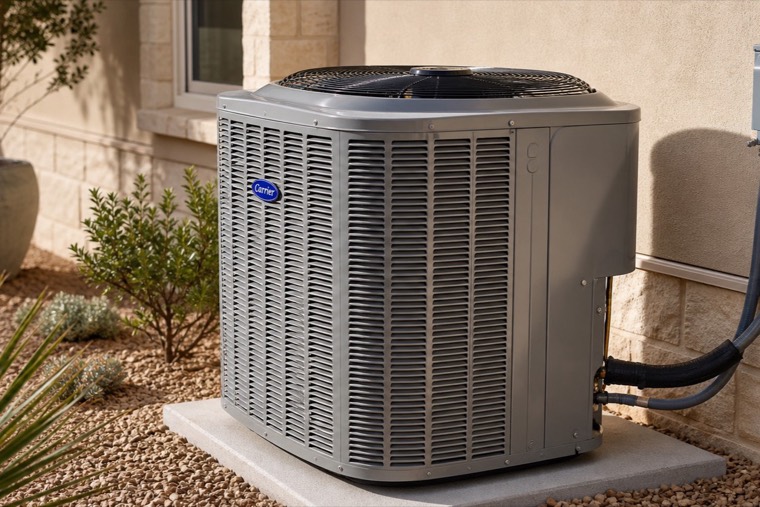
The outdoor condenser rejects your home's heat to the air outside, and it cannot do that job if it is choked with grass clippings, cottonwood fluff, mulch, or pet hair, which is common across Schertz, Cibolo, and New Braunfels yards. With the unit powered off at the disconnect, look at the finned coil wrapping the cabinet. If it is matted with debris, gently rinse it from the inside out with a garden hose on low pressure; never use a pressure washer, which bends the delicate fins. Keep at least two feet of clearance around the unit and trim back shrubs. Also confirm the outdoor fan spins freely when the system runs. On a 100-plus-degree afternoon, even a healthy system struggles to keep a poorly insulated home much more than 20 degrees cooler than outside, so a house that drifts up during peak heat is not always broken; it may be at the limit of its capacity, undersized ductwork, or attic heat gain. If the fan is not spinning or the unit is hot to the touch and silent, shut it down and call a pro before the compressor overheats.
Step 7: Ductwork, Insulation, and Thermostat Upgrades
When the equipment checks out but certain rooms never cool, the problem is often the distribution system, not the AC itself. Leaky, crushed, or undersized ducts in a hot San Antonio attic can lose a large share of cooled air before it reaches the far bedrooms, a classic complaint in two-story homes in The Dominion and Alamo Heights. A duct inspection can reveal disconnected runs, missing insulation, and poor balance that no amount of equipment repair will fix; our ductwork service addresses sealing, sizing, and routing. For additions, garages, or rooms the central system was never sized to handle, a ductless mini-split can deliver targeted cooling without reworking the whole system. Pairing duct improvements with a smart thermostat gives you better humidity control and even temperatures across the house, which matters in our humid subtropical climate where comfort is about more than the number on the wall.
When to Stop DIY and Call a Licensed HVAC Pro
Some checks are perfectly safe for homeowners: thermostat settings, resetting a breaker once, swapping the filter, opening vents, and rinsing the condenser. Stop and call a licensed professional when the breaker trips repeatedly, the coil keeps freezing after a filter change, you see or hear refrigerant leaking, the outdoor fan will not spin, there are burning smells, or the system simply will not hold temperature on a hot day. Refrigerant work, electrical repairs inside the unit, and compressor diagnosis all require proper licensing and tools; the City of San Antonio Development Services Department regulates HVAC work, and a licensed contractor pulls permits where the scope requires them. C.S.W. Power Solutions carries Texas HVAC license TACLA26479R and self-performs the work, so the same crew that diagnoses the problem fixes it, with no subcontracting handoffs. You can review all of our San Antonio HVAC services to see the full scope we cover in-house.
Get Same-Day AC Help in San Antonio
If you have worked through these steps and your AC still is not cooling, do not sweat it out. C.S.W. Power Solutions offers fast, same-day AC repair across San Antonio and surrounding communities during business hours, Monday through Friday 7 AM to 6 PM and Saturday 8 AM to 2 PM. Our licensed technicians (TACLA26479R) diagnose the real cause, give you a written estimate, and get your home cool again without upselling you a system you do not need. Call 210-504-9796 or book an estimate online to schedule prompt service. If the diagnosis points toward end-of-life equipment, we will walk you through repair versus replacement honestly so you can make the right call for your budget and your summer.
Frequently Asked Questions
Why is my AC running but not cooling in San Antonio?
The most common reasons are a clogged air filter restricting airflow, a frozen evaporator coil, low refrigerant from a leak, or a dirty outdoor condenser that cannot reject heat in the summer. Start by checking the thermostat is set to COOL, then inspect and replace the filter. If the coil is iced over or the system still will not cool after a filter change, it needs a licensed HVAC technician.
Why is my AC blowing warm air in San Antonio?
Warm air usually means the system is running the fan but not actually cooling. Common causes are the thermostat fan set to ON instead of AUTO, a tripped breaker on the outdoor unit, a frozen coil, low refrigerant, or a condenser choked with debris. Confirm the thermostat is on COOL, check the breaker, and inspect the filter and outdoor unit before calling for service.
Can a dirty filter stop my AC from cooling?
Yes. A clogged filter is the single most common preventable cause of an AC that will not cool. It chokes airflow across the indoor coil, which can cause the coil to freeze and leaves warm air circulating through the house. In San Antonio's long cooling season, check the filter monthly and replace it every 60 to 90 days to keep the system cooling efficiently.
When should I call an HVAC pro versus trying a DIY fix?
DIY is fine for checking thermostat settings, resetting a breaker once, replacing the filter, opening vents, and rinsing the condenser. Call a licensed pro when the breaker trips repeatedly, the coil keeps freezing, you suspect a refrigerant leak, the outdoor fan will not spin, or the system will not hold temperature. Refrigerant and electrical repairs require licensing; C.S.W. Power Solutions holds TACLA26479R and offers same-day service at 210-504-9796.
C.S.W. Power Solutions is a veteran-owned, licensed general contractor serving San Antonio, TX and surrounding communities including Boerne, New Braunfels, Schertz, Stone Oak, Helotes, Alamo Ranch, Converse, Universal City, Live Oak, Leon Valley, Castle Hills, Cibolo, Seguin, and Southtown. Plumbing, electrical, HVAC, generator, EV charger, and remodeling trades all held in-house under one general-contractor license umbrella.
Call 210-504-9796, book online for a written estimate, or text photos so CSW can route plumbing, electrical, HVAC, generator, water heater, drywall, painting, restoration, or general contractor repair requests to the right crew.
Email cswpowersolutions@gmail.com. Located at 4931 Enterprise Drive, Suite 1, San Antonio, TX 78249. Business hours: Mon-Fri 7:00 AM - 6:00 PM, Sat 8:00 AM - 2:00 PM. Free written estimates within one business day.